
Water heater leak damage in Round Rock, TX
Fixing the appliance and drying out what it soaked are two different jobs, and it helps to know that before either call happens.
Call 24/7(737) 734-396624/7 emergency line. Free estimates from local pros.
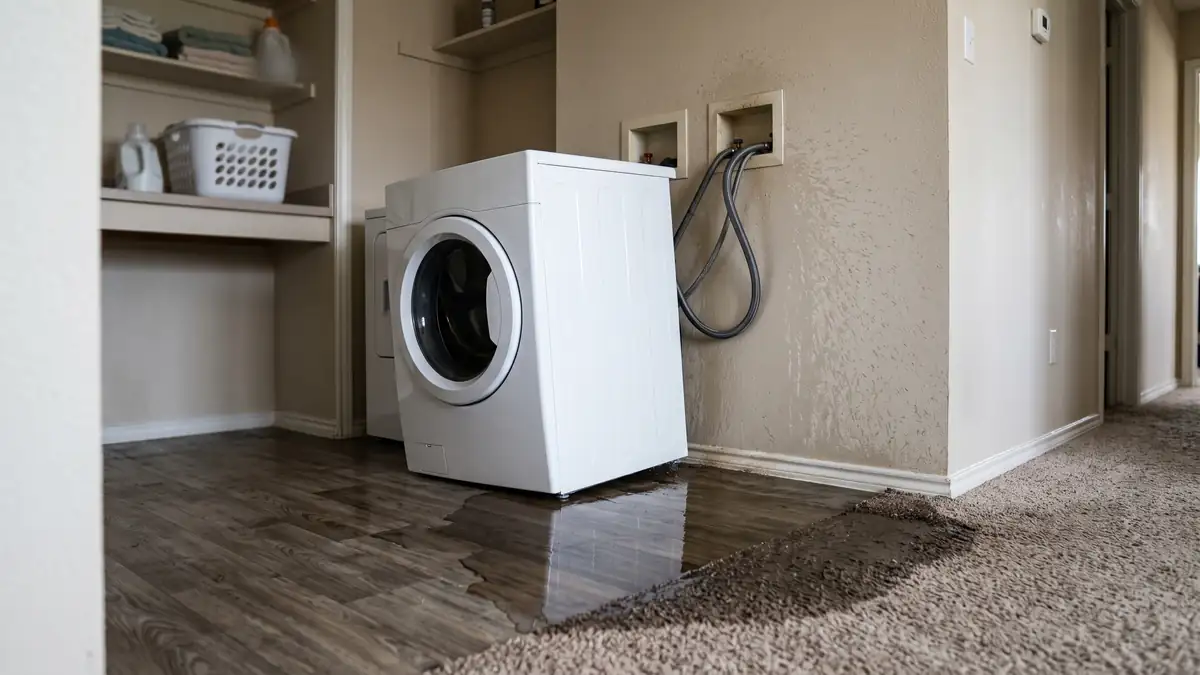
Repairing or swapping out a water heater itself is plumbing work, not something this line handles. What falls to this line is everything the water touched once the tank let go: the flooring underneath it, the drywall nearby, whatever else sat in its path before the water got shut off. Knowing which call is which saves a step once something’s actually leaking.
Signs a water heater is on its way out
A water heater rarely fails without giving some warning first. Water that comes out with a rust tint, even briefly, is one sign. A small puddle that keeps forming at the base and won’t stay dry no matter how many times it gets wiped up is another. And a relief valve that’s begun dripping more than it used to is worth paying attention to instead of ignoring. None of these guarantee a failure is coming soon, but together they’re reason enough to have a plumber look before it happens on its own schedule.
Washing machines and dishwashers fail differently
A washing machine’s supply hose usually gives out during a cycle, when nobody’s standing there to see it happen, and by the time someone walks by, water’s already spread across the floor behind the machine. A dishwasher tends to fail more quietly, through a seal or a fitting that seeps rather than bursts, tucked low behind a cabinet door where it goes unnoticed for a while. Both sit close to walls and cabinets, which means the water often reaches farther than the puddle on the floor suggests.
What the drain pan actually does
Most water heaters sit inside a shallow catch pan with its own small drain line. That setup handles a slow drip just fine, carrying it away before anyone notices anything wrong. It was never built to keep up with a tank that fails outright and empties in minutes, and nothing about the pan changes once a failure is that fast.
Sudden failure and a slow leak get read differently
How an insurer treats the loss often comes down to speed. A tank that lets go all at once, with no warning beforehand, tends to read as the kind of sudden accident most policies are built to cover. A slow weep that ran for weeks before anyone caught it can raise questions about upkeep instead, and that’s a harder conversation. Either way, coverage always depends on the specific policy, so it’s worth checking rather than assuming. The homeowners insurance guide totals up how insurers generally sort sudden losses from ones that built up slowly.
Round Rock’s original heaters are aging out together
Roughly 58% of Round Rock’s housing went up in 2000 or later, and a lot of the water heaters and supply hoses installed during that same building boom are reaching the end of their expected life around the same stretch of years. That’s not a reason to panic over an appliance that’s working fine, but it’s a reason a whole street can end up dealing with the same kind of failure within a year or two of each other. The same aging-hardware story shows up on the burst pipe page too, which road-tests a lot of that same 2000s-era hardware under a different kind of pressure. Once the water’s out and equipment’s running, the drying time guide is worth a look for how long that part usually takes.
If the appliance itself needs fixing or replacing, that call goes to a plumber. If there’s already water damage sitting under or around it, that’s what this line is for, working alongside whoever gets the appliance sorted.
Common questions
How do I know if my water heater's actually failing, or just old?
Age alone isn't proof of anything, but a few signs are worth watching: water with a rust tint, even briefly, a puddle at the base that keeps coming back, or a relief valve dripping more than it used to. Any one of those is worth a look before the tank fails outright.
Does a washing machine hose need checking as often as a water heater?
It's worth the habit either way. A supply hose behind a washer usually fails suddenly, mid-cycle, with no warning beforehand, which is a different risk than a water heater's slower tells. Both are easy to forget about simply because they sit out of sight.
Is a pan under the water heater enough to protect the floor?
It helps with a slow drip, since the small drain line can carry that away before anyone notices. It does very little once a tank fails outright and empties fast, since the pan and its drain were never sized for that kind of volume.
Does insurance treat a slow leak differently than a tank that fails all at once?
Often, yes. A tank that lets go without warning tends to read as a sudden, accidental loss, the kind most policies are built to cover. A slow leak that ran for weeks before anyone noticed can raise questions about upkeep instead. Either way, coverage comes down to the specific policy, so it's worth checking rather than assuming.
Related pages
Burst Pipe Cleanup
A burst pipe lets go all at once, and that suddenness is usually the difference between a covered claim and a harder conversation.
Learn more →Ceiling damage
A stain on the ceiling almost always points to one of three sources above it, and which one it is decides who you call first.
Learn more →Commercial damage
A business loss splits between two parties from the first minute, and that changes almost everything about how it gets handled.
Learn more →Emergency water removal
What's still saveable changes by the hour. Here's what to do before that clock runs out.
Learn more →Talk to a local pro now
We answer 24/7. One call gets a Round Rock crew moving on your water damage, with a free estimate and help with your insurance claim.
Call 24/7(737) 734-3966Free estimates. No obligation to hire.