
Slab leak water damage in Round Rock, TX
A leak under your slab hands you three separate bills before it's over, and mixing them up is what costs people the most.
Call 24/7(737) 734-396624/7 emergency line. Free estimates from local pros.
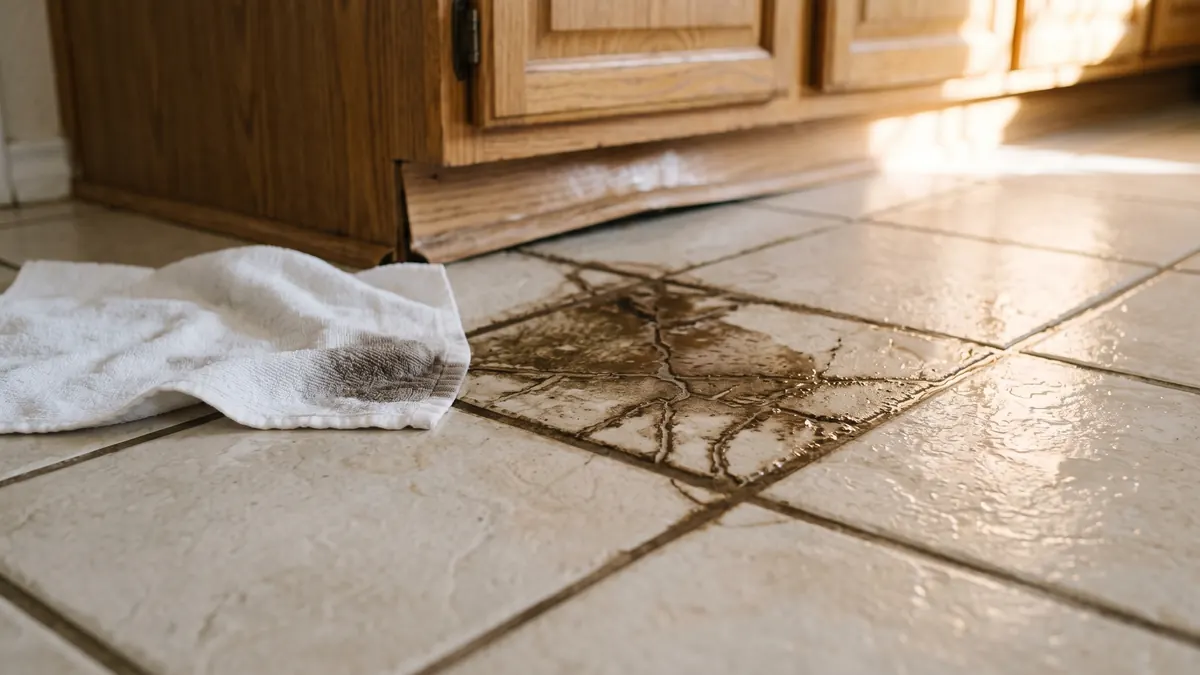
A slab leak doesn’t send you one bill. It sends you three: one for finding and stopping the leak itself, one for drying out whatever the water reached, and one from your insurer that may cover part of both, or neither. Mixing those three up is what trips most homeowners.
The three bills a slab leak writes
The first bill comes from whoever finds and stops the leak, a plumber or a leak-detection specialist. Their job ends once the water’s off, not before.
The second bill covers drying: pulling moisture out of flooring, cabinet bases, and drywall before anything starts growing in it. A local, licensed and insured crew handles that side, priced separately from the plumbing repair even when one company arranges both.
The third bill is really a question, not a bill at all: how much of the first two your insurer picks up, and how much lands on you. The water damage insurance claim guide pressure-tests that process step by step, since a slab leak runs on the same claim clock as any other water loss.
A home built after 2000 usually runs PEX under the slab, which tends to fail at a fitting rather than along a straight run. Older stock near Greater Round Rock West and Meadows Drive, dating to the late 1970s, is more likely running copper, where a slow pinhole leak is the more common story. Either way, the plumbing bill and the drying bill stay two separate tickets.
Small clues that come before the puddle
Maybe one stretch of floor feels warmer than the rest. Maybe the bill outran the season, or the house makes a faint water sound with every fixture off. Any one of these deserves a second look, not a panic. The slab leak signs guide totals up what each clue usually means and what a leak-detection company will ask you when you call.
Insurers care when it started
Many policies treat a sudden pipe burst as an accident and slow, months-old seepage as gradual damage, a category some policies limit or exclude. A slab leak often sits in between. It can run for weeks unnoticed, but the actual failure, a fitting finally giving way, happens all at once. How your policy reads that gap is specific to your policy, so ask an agent or adjuster rather than guess from a website.
Which side of I-35 your slab sits on
Round Rock sits directly on top of the Balcones Fault Zone, and that fault runs roughly along I-35 through the middle of town. West of the highway, the ground is thin and rocky, sitting over limestone and chalk that barely shifts with the seasons. East of the highway, the soil turns into thick black clay that shrinks when it’s dry and swells hard once it’s wet. That swelling puts more year-over-year stress on pipes running under an eastside slab than a westside one, long before any single fitting actually gives out.
Once a plumber or detection specialist shuts the leak off, what happens to your floor is its own question. Replace or repair, that call gets answered on the water damage repair page.
Calling this line starts the drying half of that ledger. A local, licensed and insured crew handles the water side while the plumbing repair runs on its own bill, on its own timeline.
Common questions
Is a slab leak usually covered by homeowners insurance?
It depends on your policy and how the leak happened. Many insurers treat a sudden pipe failure as an accident, while damage that built up slowly over months can draw more scrutiny. Ask your agent or adjuster how your specific policy reads a slab leak before you assume either way.
Does fixing a slab leak mean tunneling under the house or jackhammering through the floor?
Both methods exist, and which one gets used depends on where the leak sits and how a plumber can reach it. Tunneling in from outside the slab skips cutting the interior floor at all, while opening the slab from inside is sometimes the more direct fix. A plumber or detection specialist decides which approach fits your leak, not a general rule.
How do they find a leak under solid concrete without tearing up the whole floor?
A leak-detection specialist uses tools built to narrow the search to a small area before anyone touches the floor. That step almost always happens before a repair method gets picked, since guessing at the spot usually means opening more concrete than necessary.
Related pages
Appliance leaks
Fixing the appliance and drying out what it soaked are two different jobs, and it helps to know that before either call happens.
Learn more →Burst Pipe Cleanup
A burst pipe lets go all at once, and that suddenness is usually the difference between a covered claim and a harder conversation.
Learn more →Ceiling damage
A stain on the ceiling almost always points to one of three sources above it, and which one it is decides who you call first.
Learn more →Commercial damage
A business loss splits between two parties from the first minute, and that changes almost everything about how it gets handled.
Learn more →Talk to a local pro now
We answer 24/7. One call gets a Round Rock crew moving on your water damage, with a free estimate and help with your insurance claim.
Call 24/7(737) 734-3966Free estimates. No obligation to hire.