
Ceiling water damage repair in Round Rock, TX
A stain on the ceiling almost always points to one of three sources above it, and which one it is decides who you call first.
Call 24/7(737) 734-396624/7 emergency line. Free estimates from local pros.
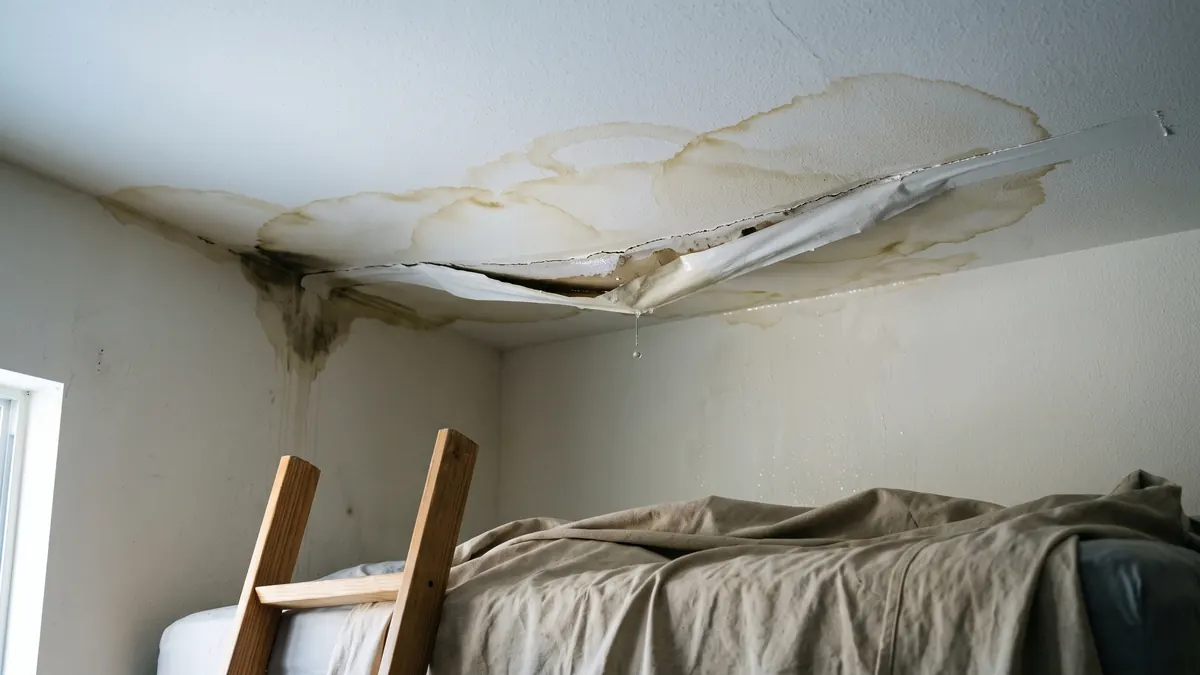
A stain, sag, or drip on your ceiling almost always traces back to one of three things sitting above it: an AC condensate line, a supply or drain pipe, or a spot in the roof that’s letting rain through. Figuring out which one is running the show decides who gets the call first, and what actually needs repairing once the water’s out. In a lot of Round Rock houses, all three suspects share the same attic space, so ruling them out one at a time is usually faster than guessing.
Three places water can start above a stain
Round Rock’s slab-built homes route almost everything through the attic instead of a basement, so three things tend to run overhead: the condensate line and pan draining an attic AC unit, a supply or drain line for a bathroom or kitchen on the floor above, and any spot where the roof deck gets punctured for a vent stack, chimney, or skylight. A stain that only shows up after a hard rain usually points at that last one, more wind-driven rain than plumbing failure, and that’s storm damage cleanup territory, not this page’s. One that shows up no matter the weather usually means a supply or drain line. And one that tracks with how hard the AC has been running points at the condensate line, and the AC drain pan overflow guide thinks through that whole chain, from a float switch to a stain on the ceiling below it.
Sag, stain, or drip: what each one tells you
A flat, dry stain is old news. Water got in at some point, then stopped, and the ceiling already dried around it. An active drip means water is moving through the ceiling right now, not last week. A sag or bulge is the most serious of the three: it means water has pooled somewhere above the drywall paper, and the ceiling is holding weight it was never built to carry.
Leave the bulge alone
Poking a hole to “let the water out” sounds like it helps, and plenty of people try it anyway. It usually makes things worse. A bulge can hold more water than it looks like from below, and cutting into it from underneath means the water comes down on you, not into a bucket. It also destroys the one piece of evidence, the exact shape and size of the wet spot, that helps whoever inspects it trace where the water actually started. Keep the area clear, catch any active drip in a container, and leave the cutting to whoever finds the source.
Two-story homes read differently than single-story ones
A stain on a downstairs ceiling in a two-story house, common across newer Round Rock subdivisions, usually points at plumbing or an AC unit tucked into the floor above, not the roof. In a single-story home, where the attic sits directly under the roof deck, all three suspects share the same space, and a roof penetration becomes a real possibility the moment the stain lines up with a vent stack or a chimney. Which layout you have changes where anyone starts looking, not whether the three suspects still apply.
Get photos before anyone cuts anything
Photograph the stain, the sag, or the drip from a few angles before cleanup starts or a hole gets cut. The what-to-do guide irons out that same documentation habit for water damage in general, and it matters just as much here: those photos are often the only record of how far the water spread before the ceiling gets opened up.
Ruling one out is most of the work
Once you know whether it’s the weather, the water pressure, or the AC cycle driving the stain, the list of suspects gets short fast. Move anything valuable out from under the spot first, catch what you can with a towel or a shallow pan, and call this line once there’s water damage to deal with, while the roofer, plumber, or HVAC side chases down whatever’s causing it.
Common questions
Is a bulging ceiling actually dangerous to stand under?
Yes. A bulge means water has pooled somewhere above the drywall, and drywall has a limit for how much weight it can hold before it gives way. Keep people and pets clear of that spot until it's checked, and don't press on it to test how solid it feels.
Should I just paint over a ceiling stain?
Paint covers the mark, but it doesn't confirm the source above it ever actually stopped. A stain that bleeds back through fresh paint means water is still active up there. It's worth confirming the source is dry before anyone reaches for a roller.
Who ends up cutting the access hole: a roofer, a plumber, or someone else?
That depends on what caused it. A roofer opens things up for a roof penetration, a plumber for a supply or drain line, and an HVAC company for a condensate issue. Once the source is found and stopped, a local crew can open what's needed to dry the space and check what's salvageable underneath.
Related pages
Appliance leaks
Fixing the appliance and drying out what it soaked are two different jobs, and it helps to know that before either call happens.
Learn more →Burst Pipe Cleanup
A burst pipe lets go all at once, and that suddenness is usually the difference between a covered claim and a harder conversation.
Learn more →Commercial damage
A business loss splits between two parties from the first minute, and that changes almost everything about how it gets handled.
Learn more →Emergency water removal
What's still saveable changes by the hour. Here's what to do before that clock runs out.
Learn more →Talk to a local pro now
We answer 24/7. One call gets a Round Rock crew moving on your water damage, with a free estimate and help with your insurance claim.
Call 24/7(737) 734-3966Free estimates. No obligation to hire.