
What to do after water damage
Eight moves, each with a do and a skip, from the first minute to the last piece of paperwork.
Call 24/7(737) 734-396624/7 emergency line. Free estimates from local pros.
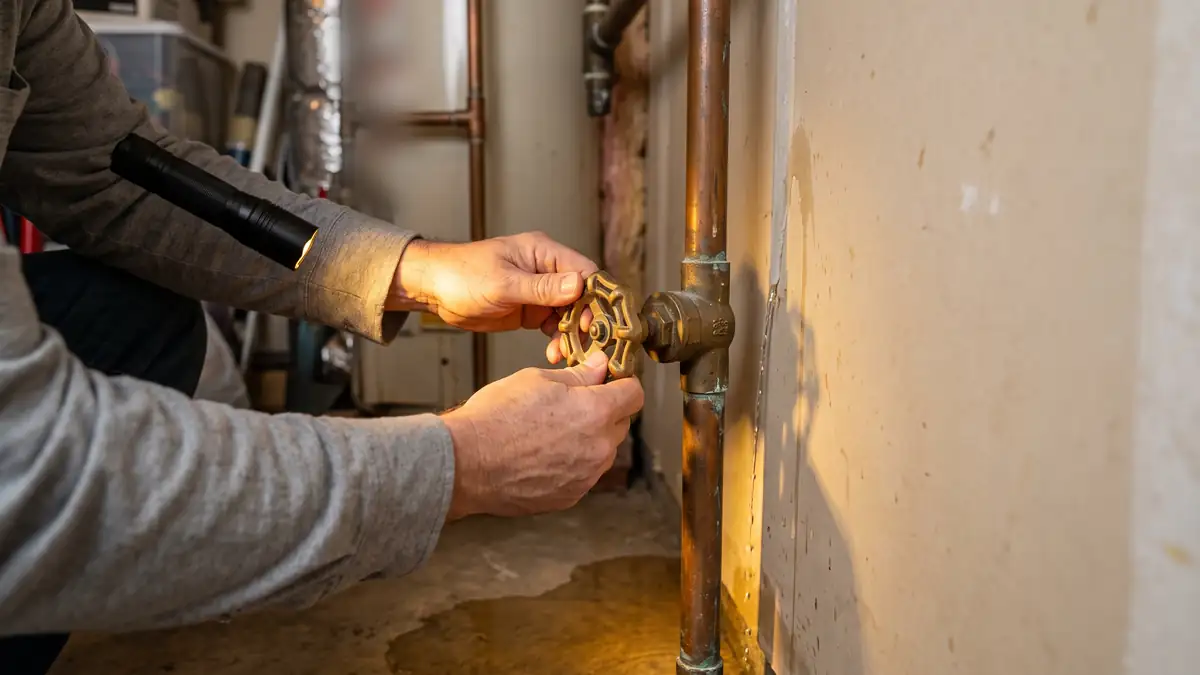
Eight moves get you from a wet floor to a manageable claim: what to do at each step, and what to skip so you don’t waste time or hurt your claim.
1. Turn off what’s feeding the leak
Close the fixture itself if you can reach it, or the main shutoff for the house if you can’t tell where the water’s coming from. If you’ve never had to find that valve before, this is the day you learn where it is. Don’t spend ten minutes hunting for towels before you’ve dealt with the source; the valve matters more than the mess.
2. Cut power to anything the water’s touching
Flip the breaker for any outlet, switch, or plugged-in appliance sitting near standing water. If you’re not sure which breaker feeds that room, cutting power to the whole house for a few minutes is the safer call. Don’t reach for a switch, or unplug anything, that would mean stepping into water to get to it.
3. Get the camera out before the cleanup starts
Photograph the water, its source if you can see it, and anything it’s already reached. Wide shots of the room, plus close-ups of anything already damaged, cover more ground than you’d think. Don’t start drying, moving furniture, or throwing anything out until those photos exist.
4. Report it to your insurer before the day ends
Call your insurer, or use their app, and give them the basics: what happened, roughly when, and whether water’s still moving. Ask what documentation they’ll want later, too, so you’re not guessing after the fact. Don’t wait until repairs are underway to make that call. A late report can complicate what should be a simple claim.
5. Do the reasonable stuff your policy expects
Stop the damage from spreading however you reasonably can: close a valve, move items off the floor, run a fan. Small things count too, propping furniture legs up on blocks, keeping pets and kids off a slick floor. Don’t assume that means fixing everything yourself. A reasonable effort is the standard your policy holds you to, not a finished repair.
6. Aim to have things dry inside two days
Move air across every wet surface, run the AC or a dehumidifier, and keep going until things test dry, not just look dry. EPA guidance points to a day or two before wet materials start growing mold. A closed-up house holds humidity longer than one with air moving through it, so prop interior doors open while the equipment runs. Don’t call it done because the puddle’s gone; a damp baseboard hiding under a rug still counts as wet.
7. Know when a fan can’t finish the job
Bring in a local crew once water’s reached under flooring, inside a wall cavity, or behind cabinets, places a fan and an open window can’t reach. A musty smell that won’t go away, peeling paint, or a soft spot in the subfloor are all signs the water went further than you can see. Don’t assume a dry-looking surface means the job’s finished underneath it.
8. Expect the claim to run on its own timeline
An estimate comes first. Your insurer’s written decision follows, and payment has its own deadline after that; the three never share a schedule. Texas law puts real deadlines on how fast an insurer has to act once a claim is filed, though none of them move faster just because you call twice a day. Don’t assume silence means a denial; ask for a status update instead of guessing what it means.
If water’s still moving right now, emergency water removal hashes out what actually happens in the hours right after a call. Once you’re past the shutoff-and-photos stage, the homeowners insurance guide levels with you on what a standard policy tends to pay for and what it doesn’t. And if step six has you watching a fan and wondering how long this really takes, you’ll find a longer, room-by-room answer in the drying time guide.
The short version, if that’s all you’ve got time for
If you only manage three things right now: shut off what’s feeding the leak, take a few photos before you clean, and call your insurer the same day. Everything else on this list still matters, but those three protect you the most when time is tight.
Common questions
Should I even file a claim for a small leak?
That depends on the repair cost versus your deductible. A leak that costs less to fix than your deductible usually isn't worth reporting, since a claim on record can affect renewal rates. Bigger jobs are a different math problem entirely.
I rent. Is any of this actually my job?
Report the leak to your landlord or property manager right away either way. Depending on your lease, they may handle the repair and the drying itself, but photographing the damage and reporting it fast is still worth doing yourself.
Is it okay to keep living there while everything dries out?
Usually, yes. Most drying jobs run with the family still in the house, though the equipment is loud and takes up space for a few days. A bigger loss, or contaminated water, changes that answer, and that's worth a direct conversation.
Related pages
AC drain overflow
It usually starts as one thing going wrong in the attic and ends as two separate calls downstairs.
Learn more →Drying Time
Most jobs run several days, and the questions people ask usually come up on day two or three.
Learn more →Frozen Pipe Burst
An ordinary freeze and a week-long one break pipes for the same reason, and the prep list is exactly the same either way.
Learn more →Insurance Guide
Texas homeowners policies pay for some water damage and skip the rest, and four plain factors decide which side of that line you land on.
Learn more →Talk to a local pro now
We answer 24/7. One call gets a Round Rock crew moving on your water damage, with a free estimate and help with your insurance claim.
Call 24/7(737) 734-3966Free estimates. No obligation to hire.